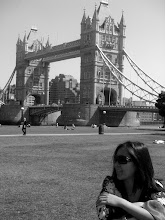
Ideas move. Goods move. And people move -- in huge numbers. Our world today is defined by massive movements of people. Think of the hundreds of millions of refugees fleeing from war-stricken countries, labour migrants, and even tourists. In the process of constant moving, borders are either broken down or built, identities are lost and created or reconstructed, traditional communities are uprooted, and cultures blend.
My life is also symbolized by constant movement. Just when I was getting comfortable with the idea of settling down here in Oslo, I had to relocate again for work purposes.
Looking back, better educational opportunities prompted me to move to a city at the age of 13. Years later, I transferred to Japan -- my second home country -- to pursue my BA and MA degree. After finishing my studies, I ended up in Thailand, my third home country, where I worked for almost three years.
I had 5 different postal addresses in my 7 years in Japan, and moved 3 times while in Thailand. Imagine the physical and emotional baggage one carries in each move? Unquantifiable. All the loves and friends lost, undelivered letters, keepsakes gone, emotions forgotten...the list goes on.
And now, after being in Oslo for only 2 months, we have moved to our new apartment. Yes, a place I can finally call home. Isn't it wonderful?
But, as fate would have it, I will have to transfer to Stavanger in a month or two for my new job.
Just when I'm ready to get rid of my emotional baggage and get comfortable, I felt the rug has been pulled out from under my feet, time and again.
Ironically, the impermanence of life is characterized by the permanence of change.
Wednesday, February 20, 2008


Tuesday, February 19, 2008
Skiing sans falling...

...is just not possible. Believe me, you fall. And.you.fall.deep.
When you are 5 or 8 years old, learning how to ski for the first time is perhaps akin to building a snowman or snow-fighting. It's riotously fun!
When you are 30 (okay, almost 31) and you're trying it out for the first time, it's a completely different matter. Just think of a baby's first steps - awkward, clumsy, and rough.
As most Norwegians love nature and outdoorsy stuff, I thought I should give cross-country skiing (or langrenn, as they say it here) a try. My first attempt was at beautifully prepared paths in a deserted mountain ski area in southwest Norway. I didn't fall - not until we had to take a rest close to a lake and I had to go a steep 2 meters down in an unprepared slope. Still, I had to congratulate myself. That first fall didn't happen until an hour after we started!
Feeling more confident, my second attempt took place at this popular ski destination for Osloites in Frognerseter/Holmenkollen area. I will realize soon after that my hope of mastering the twists and turns is shattered. With dogs running around and throngs of families with kids, there were no coherent ski tracks and I feared crashing into someone at my every turn. Once, it took me full 3 minutes to have the guts to ski downhill at one junction. I didn't fall, luckily. But you should have seen the look of a dad and his kid as I was coming close to hitting them. Gosh I was embarrassed. And not to mention that I kept everyone behind me waiting.
My third ski attempt is even more painfully memorable. I went out with a bunch of kids from a transit camp (refugees and asylum-seekers waiting to be transfered) and other NGO volunteers on a Sunday ski trip. Yes, I shouldn't even have dared to volunteer! How can I assist first-time skiers when I can't even do it myself? Crazy me, I thought it would be more fun to "fall" together with these kids. And besides, who can resist the thrill of hearing the giggles of red-cheeked Norwegian kids playing nearby or the joy of making the refugee children laugh every single time I fall?
Well, so much for my philanthropic efforts. I ended up broken into pieces after 2-3 hours of skiing and sledding. It's like after my first yoga experience - I had body pains for days. But in spite of all the beating, I will do it again. And again and again.
Thursday, February 14, 2008
Immigration Douleur (Part I)
Immigration - 'tis painful. And I'm not talking about the emotional, physical, and mental aspects of immigration but the paper processing - the formalities in short. In recent years, migration policies in Norway are getting strict, for understandable reasons of course. Why? Well, there's the principle of the welfare state's limited resources. As such, immigration must be restricted and all immigrants in Norway should have equal opportunities.
In a nutshell, immigrants in Norway are roughly composed of the following: labor migrants from the 60s to date (Pakistan, Turkey, Yugoslavia, Poland, Russia, etc.), refugees and asylum-seekers (Vietnam, Somalia, Afghanistan, Myanmar, Serbia, etc.), people who came through family reunification (this is me!), and others from neighboring Nordic countries, Western Europe, and North America. There are now approximately 415,000 immigrants in Norway.
Governed by the principle of equality, Norway strongly aims to "integrate" these immigrants into the society in order for them to be productive citizens of the country. Hence, language trainings are available for free, sufficient employment centers are available for use, universal health care is available, and other infrastructures/facilities are in place.
But the process of integration is made tedious by unnecessary impediments. Here's my experience:
1. I received my residence/work permit 6 months after I applied. And to think I am legally married to a Norwegian citizen already. Anyway, although I'm still lucky that it didn't take 11 months for UDI (Utlendingsdirektoratet or Norwegian Directorate of Immigration) to process my case, I still have to wait another month to get my social security number from the National Registry. Thus, I can't open a bank account or work while waiting.
2. After getting my permit, I was informed that I am entitled to 300 hours of Norwegian language training (including 50 hours of Norwegian society and culture classes). However, I have to get a tuberculosis control (TBC) test first. Yes, this is compulsory but free of charge. Fine. But when I made an appointment at the designated public hospital, I was told that I have to wait for one month and a half. (Surely, I must understand that there is a long queue of newly-arrived immigrants.) I'm not supposed to take the test at private hospitals and no private doctors are allowed to do this. I should use the free service, in other words. Great.
3. Granted that I will get my TBC documentation ASAP, can I immediately start the language course?, I asked Voksen Opplæring which offers the language training. No, it will take 1-3 months from the time I register. Of course, why didn't I think about that?
So, for 4 months or so, one can't avail the free language training.
For half a year to 11 months that it would take to process a residence/work permit based on family reunification, no one is allowed to work. No temporary work permit is issued. And no health insurance.
In one year, Norway may have lost thousands of potential skilled workers. Just what the Kingdom needs at this time of strong economic growth and increasing labour demand.
In a nutshell, immigrants in Norway are roughly composed of the following: labor migrants from the 60s to date (Pakistan, Turkey, Yugoslavia, Poland, Russia, etc.), refugees and asylum-seekers (Vietnam, Somalia, Afghanistan, Myanmar, Serbia, etc.), people who came through family reunification (this is me!), and others from neighboring Nordic countries, Western Europe, and North America. There are now approximately 415,000 immigrants in Norway.
Governed by the principle of equality, Norway strongly aims to "integrate" these immigrants into the society in order for them to be productive citizens of the country. Hence, language trainings are available for free, sufficient employment centers are available for use, universal health care is available, and other infrastructures/facilities are in place.
But the process of integration is made tedious by unnecessary impediments. Here's my experience:
1. I received my residence/work permit 6 months after I applied. And to think I am legally married to a Norwegian citizen already. Anyway, although I'm still lucky that it didn't take 11 months for UDI (Utlendingsdirektoratet or Norwegian Directorate of Immigration) to process my case, I still have to wait another month to get my social security number from the National Registry. Thus, I can't open a bank account or work while waiting.
2. After getting my permit, I was informed that I am entitled to 300 hours of Norwegian language training (including 50 hours of Norwegian society and culture classes). However, I have to get a tuberculosis control (TBC) test first. Yes, this is compulsory but free of charge. Fine. But when I made an appointment at the designated public hospital, I was told that I have to wait for one month and a half. (Surely, I must understand that there is a long queue of newly-arrived immigrants.) I'm not supposed to take the test at private hospitals and no private doctors are allowed to do this. I should use the free service, in other words. Great.
3. Granted that I will get my TBC documentation ASAP, can I immediately start the language course?, I asked Voksen Opplæring which offers the language training. No, it will take 1-3 months from the time I register. Of course, why didn't I think about that?
So, for 4 months or so, one can't avail the free language training.
For half a year to 11 months that it would take to process a residence/work permit based on family reunification, no one is allowed to work. No temporary work permit is issued. And no health insurance.
In one year, Norway may have lost thousands of potential skilled workers. Just what the Kingdom needs at this time of strong economic growth and increasing labour demand.
Tuesday, February 12, 2008
Happy un-valentine's day!
 How and why we celebrate Valentine's Day is beyond me. Do we even know the story behind or origin of this day? I think it is one of the overrated celebrations at present. Sure, I understand we all feel giddy and excited over the idea of having a love day. All the not-so-surprising gifts we receive (i.e. chocolates, flowers, and cards), candlelit dinners, and romantic dates. All the chocolate ads and bright red colors in stores. Couples painstakingly put efforts on finding the perfect gift for each other, while seemingly alienated singles simply hang out with friends. Sure, I love it when people are in love; it's a contagious feeling and it's in the air these days.
 In some cultures, valentine's day is a huge money-making business, no doubt about it. Think of the millions of cards, chocolate boxes, and bunches of flowers exchanged worldwide! Forget about the environment, unless you are going "green" on valentine's day or you are one of the creative types who can virtually create something special out of nothing.
In Japan, it's the women who give something to their good male friends, colleagues, and partners. What happened to gender equality eh? Well, thankfully, sometime in March, men are supposed to return back the favor. In other words, on average, you get to receive 5-10 boxes of chocolate (or something else), depending on how many you gave and how many bothered to return your gesture of affection. At any rate, forget about calories and dieting.
In Norway, valentine's day almost coincides with winter vacation. Perhaps there is some kind of festivity and celebratory feeling to it, particularly among the younger generation. However, I reckon that Norwegians are generally guarded against such dominant "foreign and imported cultures". So, even if the retail industry and commercialization may have played a key role in bringing in those red hearts and valentine goodies, valentine's day will not be celebrated to a large extent in Norway. At least not so soon.
When I was in grade school, I remember making handmade valentine's day cards for my parents. At the age of 13, I received my first artfully hand painted valentine's card. And a poem a year after. And some flowers too. Celebrating love day was simpler then. It was all about the thought and the personal touch.
In Norway, valentine's day almost coincides with winter vacation. Perhaps there is some kind of festivity and celebratory feeling to it, particularly among the younger generation. However, I reckon that Norwegians are generally guarded against such dominant "foreign and imported cultures". So, even if the retail industry and commercialization may have played a key role in bringing in those red hearts and valentine goodies, valentine's day will not be celebrated to a large extent in Norway. At least not so soon.
When I was in grade school, I remember making handmade valentine's day cards for my parents. At the age of 13, I received my first artfully hand painted valentine's card. And a poem a year after. And some flowers too. Celebrating love day was simpler then. It was all about the thought and the personal touch.
So, when my husband asked me today how should we celebrate this day? Well, we won't. Simply because each day is our valentine's day.
Happy un-valentine's day!
Monday, January 28, 2008
Jul in Norway

Christmas in Norway is all about family and traditions. You know that holiday is in the air when people from work feast on sumptuous jul (Christmas) dishes (and get drunk) in late November or early December, to celebrate the julebord (literally, Christmas table) tradition.
Typically, families decorate Christmas trees on the 23rd, the day before Christmas. On Christmas day - December 24 - they savor traditional Christmas food, such as pinnekjøtt, cod, lutefisk, and ribbe, depending on the family's palate and liking, and according to which region you belong to in Norway.
I am particularly fond of pinnekjøtt, which is salted, dried lamb ribs steamed with birch twigs for hours, and served with boiled potatoes and rutabaga (root vegetable). This dish goes very well with aquavit.
Steamed/boiled torsk (cod) is another special jul dish, which is an exquisitely luxurious dish. It is healthy, fresh, and high quality, and perfect for the holiday season when we tend to over-eat.
Ribbe or pork rib roast is an ultimate Christmas food for feasting. It is sinfully tasty and rich with spices and wonderful aroma. Coming from a country where lechon (roasted whole pig) is a national dish, ribbe is naturally one of my favorite jul dishes! How I love those crunchy cracklings!!
Meanwhile, lutefisk (lye fish) is also on the holiday menu and arguably a national delicacy which elicits extreme culinary responses, from disgusting to dangerous to delicious. Lutefisk is supposedly a cod or haddock or pollock fish that undergo a long, complicated process of drying, soaking in cold water, and treating with lye solution, before boiling it with salt water. The end product, if cooked properly, is a translucent, gelatinous fish. It is rated one of the 10 worst food on earth. For many Norwegians, it is an acquired taste. For me, it tastes just like a boiled bland fish, with a slight peculiar taste to it. It's definitely far from lethal. And besides, I eat it with red wine vinegar, thereby adding color and taste to this age-old traditional dish. (It is also a lame demonstration of my need to fuse two cultures together).
Another interesting yuletide culinary tradition is serving a porridge (with butter, sugar, and cinnamon) on Christmas day, before or after Christmas dinner, with an almond hidden inside someone's bowl. The one who has the almond gets the marzipan pig. Don't ask me why a marzipan pig...
And I must not forget that after a hearty Christmas meal and a cloudberry cream for dessert, and before opening the gifts, family members gather around the juletre (Christmas tree) and sing some Christmas carols.
Christmas is also the time for partying, particularly for students who go back to their hometown during the holidays. Usually arranged on the 2nd or 3rd day of Christmas, young people go out at night to drink and party until the wee hours of the morning.
Another interesting yuletide culinary tradition is serving a porridge (with butter, sugar, and cinnamon) on Christmas day, before or after Christmas dinner, with an almond hidden inside someone's bowl. The one who has the almond gets the marzipan pig. Don't ask me why a marzipan pig...
And I must not forget that after a hearty Christmas meal and a cloudberry cream for dessert, and before opening the gifts, family members gather around the juletre (Christmas tree) and sing some Christmas carols.
Christmas is also the time for partying, particularly for students who go back to their hometown during the holidays. Usually arranged on the 2nd or 3rd day of Christmas, young people go out at night to drink and party until the wee hours of the morning.
All these jul festivities wind down around the 13th/14th day of Christmas or immediately after New Year's day (it varies across regions) when children dressed up in costumes and sing carols from one house to another, in return for some candies and goodies. This tradition is called julebukk or nyttårsbukk. This is of course a perfect time for adults to put their extra goodies into good use and get rid of unnecessary calories:-).
Tuesday, January 22, 2008
Norge here I come!

Sheer excitement best described my feelings upon arrival in Norway -- imagine the new friends I will meet, novel experiences I will encounter, and totally unfamiliar environments I will tread upon?
Coming from a tropical country where the sun smiles year-round, arriving in the middle of winter and being greeted with a minus degree temperature is hardly a "warm" welcome. Yet, the frosty white landscape and thoughts about white Christmas did make my heart warm; hot chocolate drink, home-baked cookies, and traditional Norwegian Christmas dishes. Uhmn, yummy.
So why the blog theme "dance with reindeer"?
For most of us (and I mean Asians), Norway seems like a remote, cold country where the midnight sun (24 hours of pure sunshine) exists and polar bears live. And oh, the Vikings! Which are all true, except of course that there are four seasons in Norway, the midnight sun lives for a month or so in the northern part of the country, and polar bears are mostly found in the archipelago of Svalbard (very close to the North Pole) where only few human beings are lucky enough to see them in their natural habitats. And the Vikings are but history now.
For most of us (and I mean Asians), Norway seems like a remote, cold country where the midnight sun (24 hours of pure sunshine) exists and polar bears live. And oh, the Vikings! Which are all true, except of course that there are four seasons in Norway, the midnight sun lives for a month or so in the northern part of the country, and polar bears are mostly found in the archipelago of Svalbard (very close to the North Pole) where only few human beings are lucky enough to see them in their natural habitats. And the Vikings are but history now.
According to me (based on 2 summer visits and my first month in the country), Norway is all about nature: dramatic landscapes (mountains, lakes, fjords, and seas), outdoorsy lifestyle (skiing, hiking, fishing, etc.), wild berries, fish (salmon, trout, cod), Northern Lights, stave churches, and reindeer.
Reindeer represent strong traditions of Norway; reindeer hunting is a 10-thousand year old tradition, reindeer meat is considered a delicacy (sorry Rudolph!), and some municipalities have reindeer depicted in their coat-of-arms. They are hunted, yet domesticated; seemingly amiable, yet elusive; powerful, yet vulnerable.
To "dance with reindeer", as my personal goal, is simply a metaphor for understanding Norway's cultural identity and society and immerse myself into this newly-adopted homeland. And more literally, to touch a beautiful wild reindeer, if I happen to stumble upon them in my future hiking trips.
Reindeer represent strong traditions of Norway; reindeer hunting is a 10-thousand year old tradition, reindeer meat is considered a delicacy (sorry Rudolph!), and some municipalities have reindeer depicted in their coat-of-arms. They are hunted, yet domesticated; seemingly amiable, yet elusive; powerful, yet vulnerable.
To "dance with reindeer", as my personal goal, is simply a metaphor for understanding Norway's cultural identity and society and immerse myself into this newly-adopted homeland. And more literally, to touch a beautiful wild reindeer, if I happen to stumble upon them in my future hiking trips.
And to end my very first blog, imagine how different my country (Philippines) is from Norway...
Norway
Population - 4.6 million
Languages - 11
Population below poverty line - NA% (wow!)
Human Development Index (HDI) - 0.968 (2nd)
HPI (Happy Planet Index) - 115th
Philippines
Philippines
Population - 91 million
Languages - 175
Population below poverty line - 40%
Human Development Index (HDI) - 0.771 (90th)
HPI (Happy Planet Index) - 17th
I rest my case...
Subscribe to:
Posts (Atom)